

The Business Reports Every Growing Company Needs in 2026 (And How a Smart Dashboard Changes Everything)
The Business Reports Every Growing Company Needs in 2026 (And How a Smart Dashboard Changes Everything)
From cash flow forecasts to billable hours and contract tracking — explore the reports that give growing businesses full visibility in one place.
Running a business without the right reports is like driving without a dashboard. You might be moving, but you have no idea how fast, how far, or whether you're about to run out of fuel.
For finance teams, HR managers, legal departments, and project leaders, having access to the right data — at the right time, in the right format — is what separates reactive businesses from proactive ones. Yet most companies still rely on spreadsheets, disconnected tools, and manual exports to piece together a picture of how the business is actually doing.
This article breaks down the most important reports your business should have across four key areas: Finance, Contract Lifecycle Management, Planning, and People Management. Whether you're a CFO looking for tighter control over cash flow, an operations manager tracking billable hours, or an HR lead monitoring leave patterns — the right reporting setup can save hours every week and surface insights that would otherwise stay hidden.
Why a Customizable Dashboard Matters
Not all businesses are the same, and not all managers need the same view. A customizable dashboard lets each team — and each person — surface the data most relevant to their role, without wading through irrelevant numbers.
The best dashboards combine:
- Real-time data, so decisions are based on what's happening now, not last month
- Filters and date ranges, so you can slice data by period, department, project, or category
- Visual summaries alongside detailed breakdowns, so both executives and analysts get what they need
- Cross-module visibility, so finance data doesn't live separately from project data or HR data
With that in mind, here are the reports that matter most — by area.
Finance Reports
Finance is where reporting has the highest stakes. Inaccurate or delayed financial data leads to poor decisions, missed obligations, and cash flow surprises. These are the reports every finance team should have readily available:
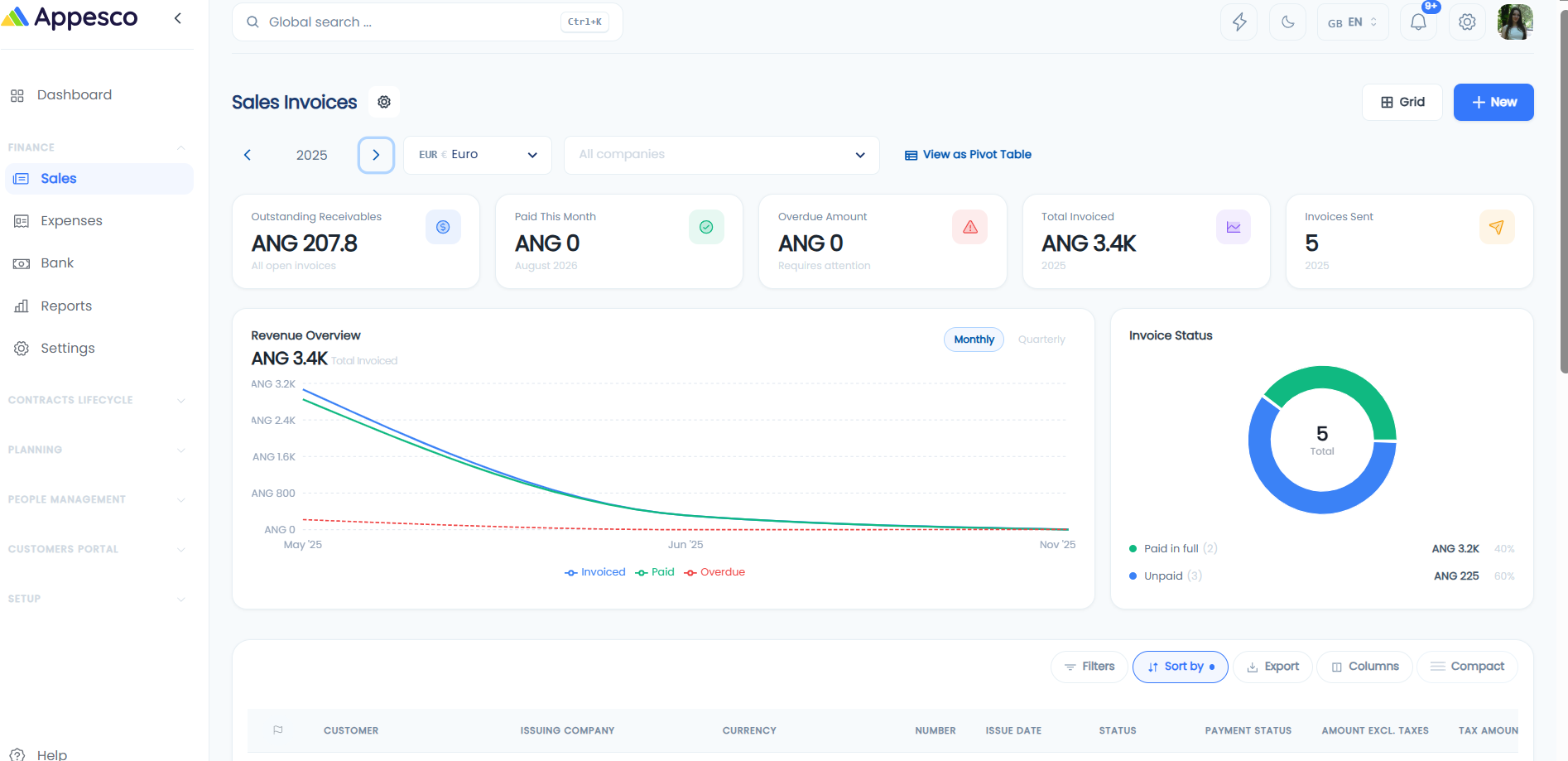
Revenue overview. A high-level snapshot of total revenue over a selected period. Useful for tracking growth month over month, comparing against targets, and presenting to leadership.
Revenue breakdown. Revenue disaggregated by product, service, client, or region. This is where you understand not just how much you're earning, but where it's coming from — and which revenue streams are growing or shrinking.
Expenses by category. Total spending organized by type — software, salaries, travel, utilities, marketing, and so on. Essential for budget reviews and identifying areas of overspend.
Expenses by supplier. A breakdown of spending per vendor. Helps procurement and finance teams identify top suppliers, negotiate better terms, and spot unexpected cost concentrations.
Expenses breakdown. A more granular view of all outgoing payments, filterable by date range, department, or cost center.
Total expenses. A single consolidated figure for total outgoing spend over a period — useful for quick reporting and board-level summaries.
Net profit Revenue minus total expenses. The foundational metric for understanding whether the business is actually making money after all costs are accounted for.
Cash flow and forecasts. One of the most critical reports for any business. Shows money in versus money out over time, with forward-looking projections to anticipate shortfalls or surpluses before they happen.
Transactions overview. A full ledger view of all financial transactions, with filters for date, type, and category. Useful for audits, reconciliations, and answering specific queries quickly.
Sold services and products. A report on what has been invoiced and delivered — broken down by product or service type. Connects sales activity to revenue recognition.
Invoices collection. Tracks outstanding invoices, due dates, and payment status. Helps finance teams manage accounts receivable, follow up on overdue payments, and reduce days sales outstanding (DSO).
VAT position overview. A current view of the company's VAT liability or credit position, so there are no surprises at reporting time.
VAT quarterly breakdown. VAT collected and VAT paid, broken down by quarter. Essential for preparing VAT returns accurately and on time.
Contract Lifecycle Management Reports
Contracts are legal and commercial commitments — and losing track of them has real consequences. The right CLM reports help legal and commercial teams stay ahead of obligations, renewals, and risks.
Contracts by status. A view of all contracts segmented by their current stage — draft, in review, active, expired, terminated. Instantly shows where attention is needed and what's moving through the pipeline.
Contracts by number. A simple but powerful list view of all contracts, filterable by date range, counterparty, or responsible team member. Useful for audits and due diligence.
Contracts by folder. Many organizations structure contracts by business unit, client, or project. A folder-based report gives a structured view of contract volumes and activity per category.
These reports help teams answer common but critical questions: How many contracts are expiring in the next 90 days? How many are awaiting signature? Which counterparties have the most active agreements?
Planning Reports — Projects and Time Tracking
For businesses that bill by the hour, run project-based work, or need to track team productivity, planning reports are indispensable. The most valuable ones relate to how time is being spent.
Billable hours. Total hours logged that can be charged to a client or project. The primary metric for revenue tracking in service businesses.
Non-billable hours. Hours worked but not charged — internal meetings, administrative tasks, training. Understanding the ratio of billable to non-billable hours is key to improving team efficiency and profitability.
Hours by project. A breakdown of time logged per project, allowing managers to compare estimated versus actual effort, identify overruns early, and allocate resources more effectively.
When combined with financial data, these reports can answer questions like: Is this project profitable? Are we underpricing our services? Which clients consume the most time relative to revenue?
People Management Reports
HR and people data often goes underreported, even though it directly affects productivity, compliance, and cost. The reports below give people managers and HR teams the visibility they need.
Leave overview. A summary of leave taken, pending, and remaining across the team. Useful for workforce planning and spotting patterns — such as high absence rates in specific periods or departments.
Timesheet summary. A view of logged working hours per employee, project, or period. Helps managers verify attendance, review overtime, and feed data into payroll processes.
Team availability. Who is available, who is on leave, and when — at a team or department level. Critical for project planning and avoiding scheduling conflicts.
People data becomes especially powerful when it connects to planning and finance — understanding not just who is present, but what they're working on and what it costs.
Bringing It All Together
The value of individual reports multiplies when they live in a single platform. When finance, contracts, projects, and people data are connected, you start to see the full picture:
- A contract signed with a client connects to the project created for delivery, which connects to the hours logged, which connects to the invoice raised and the revenue recognized.
- A spike in non-billable hours connects to a dip in net profit, which shows up in the cash flow forecast.
- A team member's leave pattern connects to a project delay, which connects to a contract deadline.
Siloed reporting tools break these connections. A unified platform preserves them.
Try It for Free
Appesco brings all of these reports together in one platform — Finance, Contract Lifecycle Management, Planning, and People Management — with a customizable dashboard that lets every team see what matters most to them.
If you're looking for a smarter way to run your business reporting, you can try Appesco for free and see how it works for your team.
